Skip to content

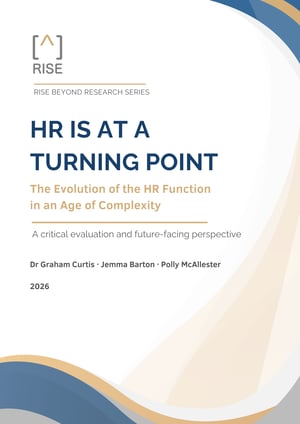
HR is at a Turning Point

A white paper exploring how HR can work differently in complex organisational conditions

Across organisations today, HR is under growing pressure.

Expectations have expanded. The conditions organisations operate within have become more complex, less predictable, and more relational. Yet the models many HR functions rely on were built for a steadier world — one where strategy could be planned, culture felt stable, and people could be aligned through policy, process, and incentive.

That gap is becoming increasingly visible.

Recent headlines questioning the value of HR reflect a frustration many organisations feel. Not because HR isn’t working hard enough, but because effort is often being applied through approaches that struggle to respond to the realities organisations now face.

The Ulrich framework gave HR a shape and a language. What it did not offer was a way of thinking about organisations as the complex, shifting systems they actually are.

HR Is at a Turning Point explores what is happening beneath these pressures and makes the case for a different way of thinking about HR partnership.

The paper argues that the most important shift for HR is not doing more, but working with the nature of organisations as they are.


Why It Matters

Organisations today are navigating conditions that are increasingly complex:

  • constant external change
  • competing organisational priorities
  • cultural fragmentation
  • pressure for faster decision-making
  • heightened expectations of leadership and people functions

In these conditions, traditional approaches centred on process, policy, and control often struggle to create the adaptability organisations need.

The question for HR is no longer simply how to become more strategic.

The deeper question is whether current ways of working enable organisations to think clearly, act wisely, and adapt together.

When HR works effectively with complexity it can help organisations:

  • Strengthen organisational judgement, not just compliance
  • Support leaders to navigate ambiguity rather than avoid it
  • Surface the dynamics shaping culture beneath formal structures
  • Enable more thoughtful and adaptive responses to change
  • Build trust and coherence across the organisation

This requires a shift in how HR understands its role and influence.


What the Paper Explores

The white paper brings together practitioner experience and thinking from work on complexity, culture, and organisational change.

It explores:

Why the current HR model is showing its limits
Many HR functions are working extremely hard within models designed for different organisational conditions.

The gap between effort and impact
Growth in HR activity has not always translated into the capability organisations need most.

The role HR can play in supporting organisational adaptability
Particularly through HR Business Partners working at the interface between leadership, culture, and change.

What a different approach to HR partnership might require
Including shifts in capability, mandate, and organisational conditions.

The argument is simple but significant:

The work ahead is not about HR doing more.

It is about HR doing things differently.

The HR Evolution Self-Assesment Tool

Alongside the paper we created a practical reflective tool.

The HR Evolution Self-Assessment maps eight capabilities that shape how HR partners with organisations navigating complex conditions.

These capabilities characterise the holding of HR partnership when the work involves uncertainty, competing priorities, and evolving organisational dynamics.

The tool is designed as a reflective wheel, not a scorecard.

It allows individuals or teams to:

  • See the current shape of their HR practice
  • Identify areas of genuine strength
  • Notice where capability or organisational conditions may constrain impact
  • Open meaningful reflection about how HR partnership might evolve

The tool typically takes around 15 minutes to complete, though many people find the most valuable insights emerge through discussion with colleagues or teams.

The value lies not in the scores themselves, but in the reflection the tool enables.


What the Tool Helps Surface

When HR leaders use the wheel, a common insight emerges.

The scores that feel most uncomfortable are not always about capability.

Often they reflect conditions:

  • the mandate HR has been given
  • how the organisation involves HR in decisions
  • what leadership measures and rewards
  • where HR is positioned in relation to strategy and change

HR practitioners can have strong instincts and still find themselves retreating to process if the conditions do not support anything else.

The tool helps make those dynamics visible.

What’s Next?

The white paper and self-assessment tool are designed as a starting point for reflection.

For some people, they simply clarify something they have been sensing for a while.

For others, they open a deeper conversation about how HR partnership might evolve — whether through leadership reflection, team development, or structured capability building for HR Business Partners.

If the themes resonate, the next step is simply to explore the material.

 The Evolution of the HR Function in an Age of Complexity   

RISE_HR_White_Paper.pdf

Download the White Paper and Tool

Access the full HR Is at a Turning Point white paper and the accompanying HR Evolution Self-Assessment Tool.

Together they offer both a perspective on the pressures facing HR and a practical way to reflect on how HR partnership might evolve in complex organisational conditions.

Download the white paper and tool below.

Want to know more?

  • We're happy to share more about the framework, and how it works in practice, both in organisations and beyond.